
Your child feels what you won't say out loud
Prefer to listen on the go? Enjoy the podcast version.
My son looked me dead in the eye and said: I am not going to forest school today. My husband was away on a trip out West, I had two clients that day, and my son wasn't moving.
My mind started racing “I have two clients today. I have no time for this. WTF is happening. Why is this happening. I don't want to deal with this now.” and so on. I couldn't understand why my son was insisting on not going, seeing as he’d been going to this place for two years.
Part of me wanted to force him to go – it would just make it so much easier to put my foot down. But, the more I insisted (uncertain of my own insistence), the more he dug his heels in.
I remember this moment of looking at him, frantically trying to convince him to come with me out the door, and him returning the unwavering gaze — I saw the fear in his eyes.
I felt the uncertainty he was feeling.
I knew this was my moment to pause.
Because if I don't pause, all I'm left with is the culturally conditioned script of how to parent for a particular outcome.
But I live my life differently, and these are the moments that become the lived experiences that deepen my capacity to live from my internal cues.
Once I paused and intentionally brought my attention inward, I noticed how scared I really was. In truth, I didn’t feel safe when my husband wasn’t home. For those of you that don't know my story, I spent a decade addicted to drugs in an effort to numb the pain. When discomfort is present, escapism is familiar to me.
So when I noticed I felt afraid, I knew my son did too. Children pick up on our internal states, not our words. The more we push, the more they know to hold on. We might say one thing, but our internal state is telling him another. Children pick up on the vibrations behind the words, not the words themselves.
Bottom line was this: My son wanted to be near me when he could sense that I did not feel safe. He knows that we're safe when we're together. By keeping an eye on me, he would feel safe.
Brilliant response, isn’t it?
One that would not be available to me had I not sufficiently paused and redirected my attention from “how am I going to get this child to comply” to “how else might I choose to engage this moment for evolution”.
The books won't get you there.
How many parenting books do you figure you’ve read in your life? How many hours have you spent listening to the experts? How many scripts can you quote of what you’re supposed to say to your child in a moment of crisis?
I hear you – you’re trying to parent differently than you were parented. Yet no matter what you’re doing, your child is still not responding the way you think they should. Why might that be?
Before I dive into what it is, let me explore with you what it isn’t:
It isn’t your child.
It isn’t your strategy.
Most parenting advice focuses on what to do when a child is expressing difficulty in the moment – usually framed around misbehaving. Behaviour modification therapy and gentle parenting have taken off in modern parenting like wildfire. Before we go any further, it’s not that I disagree with these modalities per se, it’s that parenting is far bigger than behaviour modification – it’s about shaping their young minds. It's about the quality of their lives. It's about emergence and becoming.
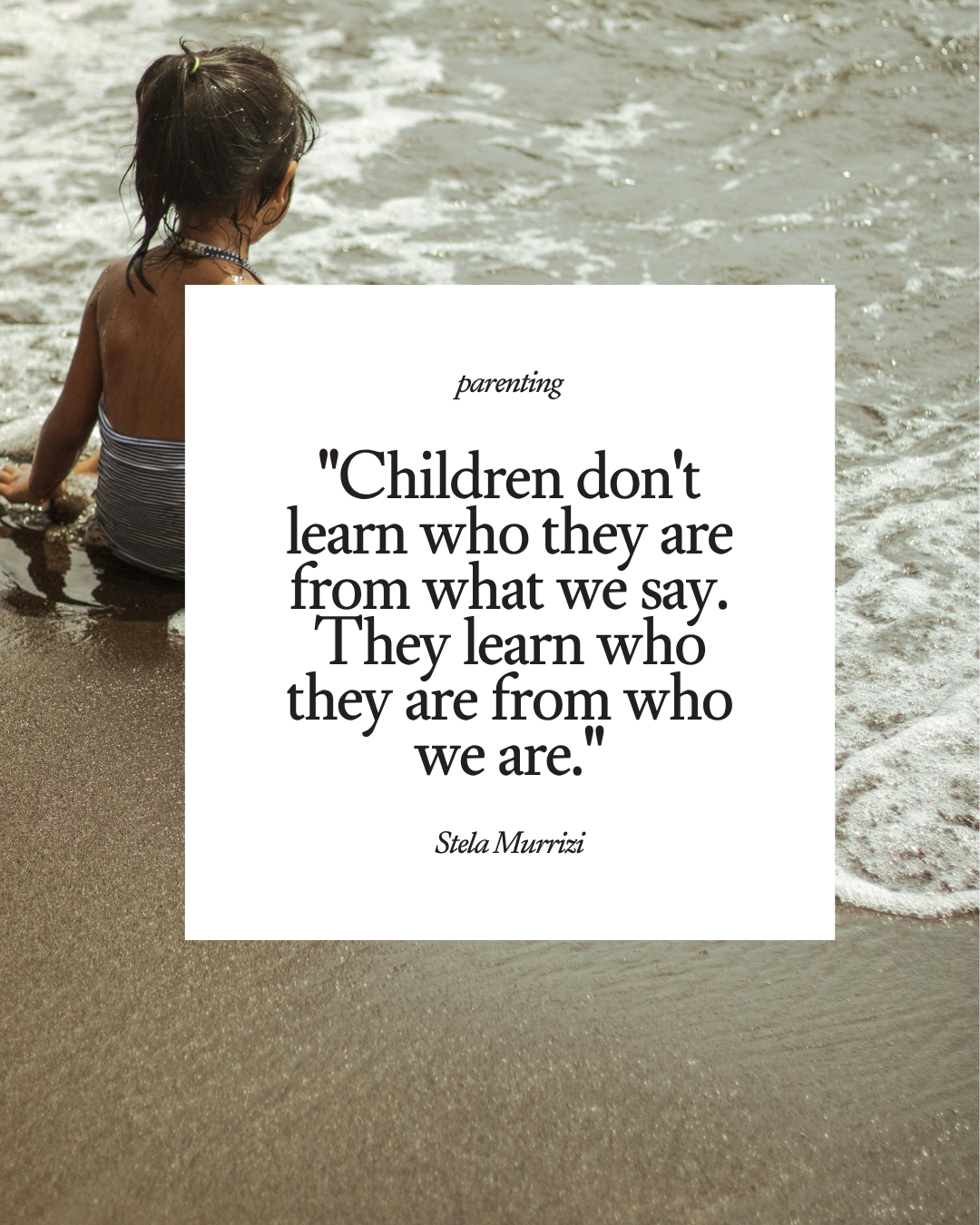
This leads us to conclude that the strategy you’re engaging isn’t the problem. Because when you’re communicating with your child, it’s not the strategy that leads the exploration, but who you are. What your child senses is not your words — it's your internal state. They respond to the unspoken belief system running underneath the strategy.
That's why you must become mindful of your strategy and the belief systems driving it.
So what did I do? I kept my clients, told them my son is here. I told him I’m with clients and would need his help staying quiet and playing on his own. He was more than happy to oblige. My clients were thrilled to have been included in this experience. And it worked out beautifully for everyone.
The kind of triple win that would not have been available for me had I insisted on ensuring he gets out the door and goes where he’s supposed to. I wonder what reality I would have created it had I insisted... ?
We all have that loud, insistent and persistent voice that tells us how things should be. When we succumb to that voice, we replicate the past, more or less. We parent how we were parented, not how we want to parent.
Which brings me to why that happens.
Between the ages of zero and seven, your nervous system downloaded a worldview passed to you through your parents and reinforced through culture. During that time, you learned the safest response to your environment growing up. You learned how to avoid pain and punishment, and how to get rewarded. Your nervous system internalizes this as a program that it runs automatically, therefore out of your awareness.
If you’re curious what that programming was for you and how it continues to impact your life today, check out this quiz.
This is the only shift that actually works.
When the program you live from is not intentionally challenged, it continues to run the unconscious responses to your life. You probably know that; what you might not know is that what you’re responding to when your child pushes your buttons is NOT them, but everything that got installed in your nervous system before you had any say in it.
It can be scary when you think about it, because it shows us pretty directly how the apple doesn’t fall far from the tree.
This is why no matter how many books you read or how many parenting courses you take, the strategies you’ll learn about won’t work. Because in those push-comes-to-shove moments with your child what’s running the show is not them, but your inner child. And these moments don’t just pass — they repeat, until something in us changes.
Turning the kaleidoscope inward is the key, because it means you stop focusing on the child's behavior and start noticing your own internal signals. When you know why you’re responding the way you are and you know how to stay present differently in the moment the trigger shows up, the strategy you seek emerges from your moment, not your mind. When you know how to untangle your mind, read your body, and breathe like it’s your birthright, the strategy shows up without effort. In truth, when you reconnect with yourself, the entire interaction changes.
What if the moment your child resists you is actually an invitation — not to manage them, but to meet yourself?
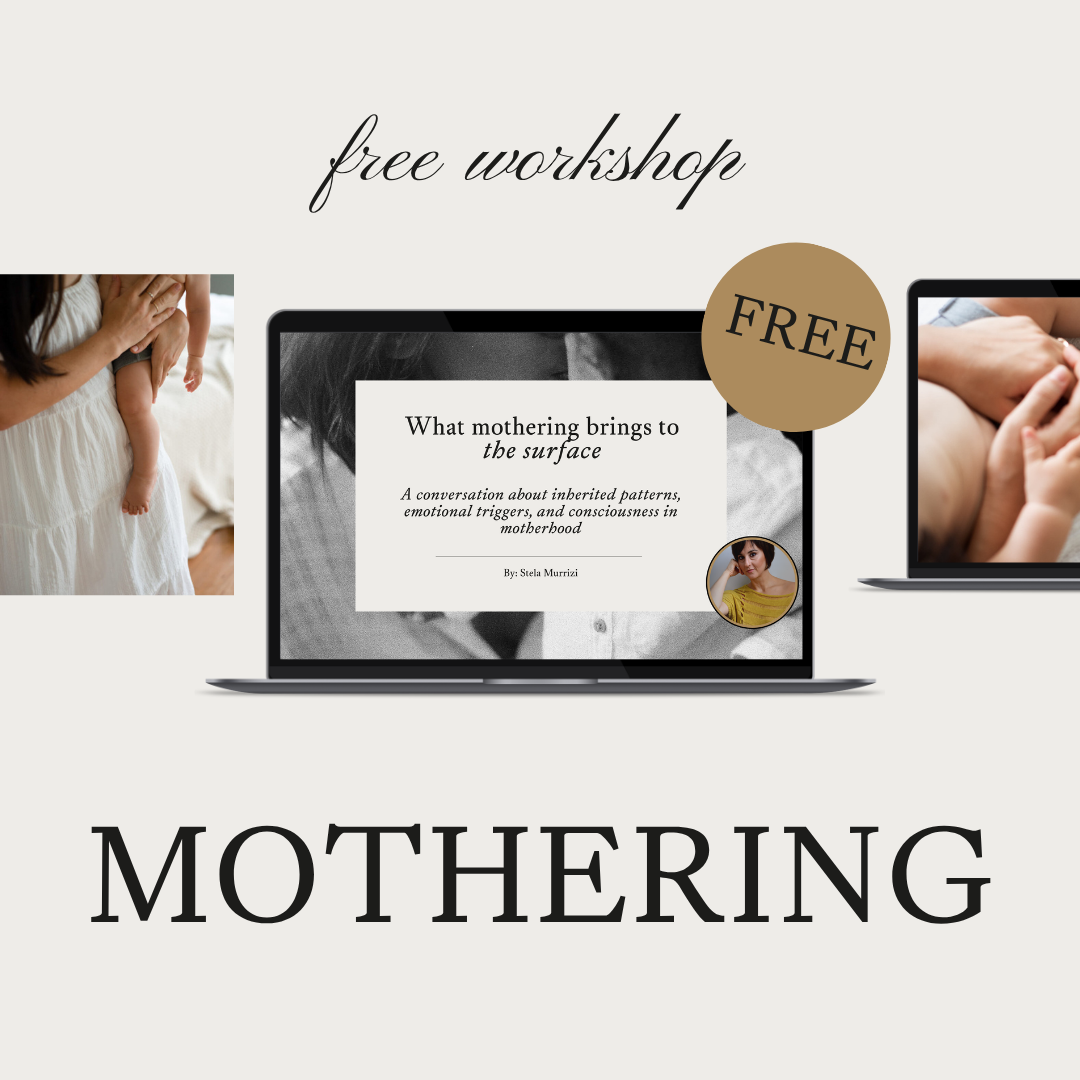
A recorded workshop mothers exploring the emotional and intergenerational patterns beneath motherhood.
To become a mother is to redefine who you are. To become more than what your ancestry gave you permission for, you must discover how to individuate and create a life that belongs to you. When you do, your children will follow.
If this resonated, you might also like..



The trick is to discover how to make them your best friend … because ultimately, they are. in Settings